The 70:20:10 learning principle is golden with new holistic knowledgeecosystems (HKEs). Unlike conventional eLearning systems that lecture at users with words, graphics, and videos,HKEs allow eLearners to experience learningprocesses as they navigate through proprietary, real-world, organization-centricknowledge ecosystems. The learning experience is both conscious andsubconscious. But there is a catch.
New HKE technologies are holistic, requiring that knowledgedomains—such as organizations, departments, projects, job functions, and their tasks—befaithfully modeled to achieve the highest results. When properly modeled, whatremains is a living, breathing, digitized holistic knowledge ecosystem that evolvesas relevant data, subject matter content, and analytic insights morph theecosystem, mirroring real-world knowledge environments. End users find thelearning experience engaging andrewarding because they can query the knowledge ecosystem anytime, anywhere, tolearn vital organization-centric knowledge within seconds.
What is also different with new holistic knowledgeecosystems is that they require a different kind of modeling expertise fromthat of instructional designers. That expertise is called “knowledge engineering,”a title that in general seems to many instructional designers to be overlystructured and less creative. They may have a point, because knowledgeengineering is about faithfully modeling existing structural, behavioral,functional, and analytic knowledge without the embellishments, whileinstructional design is about translating those domains of knowledge intocreative expressions that are intended to make learning more effective andengaging.
Thankfully, there is a middle ground, so neither side mustyield. Let’s explore this further.
The knowledge engineer/instructional designer dichotomy resolved
When walking into a customer’s office, both knowledgeengineers and instructional designers have similar goals—that is, to determine theknowledge domain, function, or task that needs to be communicated and taught. Theknowledge engineers, trained in the art and science of identifying,decomposing, and modeling most every form of how, why, and what-if knowledge,want to know what the requirements are for the project and what resources arecurrently available to support those requirements. They then need to know wherethose resources are located and which subject and operational experts cananswer both their deep-knowledge questions and their higher operationalquestions.
The definition of subject matter experts: Scientists, engineers,and advanced practitioners related to every possible academic, commercial, andsocial discipline, such as biological and chemical scientists, R&D engineers,data scientists, geophysicists, doctors, dentists, lawyers, financial analysts,accountants, and all other professionals who apply their hard-gained educationand expertise to every form of commercial, government, and academic concern.
Instructional designers come in contact with these same experts,and they follow the same requirements and resource-gathering procedures asknowledge engineers. However, unlike knowledge engineers who are more concernedabout faithfully modeling knowledge as used by subject matter experts, instructionaldesigners have greater interest in applying their talents to addressing the psychologicalmakeup, motivations, learning traits, and so forth of targeted learners. Neitherapproach is right or wrong, since any knowledge-modeling methodology that workshas value.
It is just that knowledge engineers lean more toward thesubject-matter-expert side of the dichotomy and instructional designers leanmore toward the creative-communication side. Given the widely helddissatisfaction with conventional learning management systems (LMSs), we mustconclude that the time has come to look deeper into how knowledge engineeringand instructional design disciplines can together solve the current LMS dissatisfactionproblem.
Holistic knowledge ecosystems
New holistic knowledge ecosystem technologies present apowerful alternative to conventional LMSs. These systems are designed to faithfullysimulate the lessons-learned structural, behavioral, functional, and analyticknowledge of headquarters, departments, projects, job functions, and tasks sothat modeled knowledge is consistently distributed for use by employees,consultants, suppliers, and customers. In addition, these systems are designedto accommodate many eLearning materials that have been developed on third-partyapplications. Everybody wins.
Likewise, holistic knowledge ecosystems provide the meansfor modeling disciplines to address the requirements of subject matter experts andnew initiates alike. HKEs do this by using the same language and contextualformats that each class of user knows and understands. Likewise, associated scientific,engineering, and general knowledge content developed by knowledge engineers orinstructional designers can be easily integrated anywhere within these ecosystems.Given this, we may be at the starting point where the combined talents ofknowledge engineers and instructional designers can break through the LMS“dissatisfaction barrier” that has disappointed chief learning officers formore than a decade.
The 70:20:10 principle represents a learner-centric,action-oriented approach
The 70:20:10 principle is an essential criterion of holisticknowledge ecosystems. This principle places the emphasis on lessons-learnedknowledge and its application within the real world. The most advanced systems teacheLearners, on the spot, how to effectively apply the knowledge they need to learn,at the same time they apply that knowledge to solve problems. It is asynergistic learning experience that occurs while the knowledge ecosystem’s eLearning,eMentoring function guides the learner through the execution steps. As thisoccurs, the deepest form of learning takes place, and thus it is gained morequickly and retained longer.
To illustrate this point: In 1990, the year after the Berlinwall came down, the US government maintained more than 80 science and technologylaboratories (S&Ts). These S&Ts, along with most research universitiesacross the country, warehoused America’s knowledge in the brains of subject matterexperts and in the manuals they wrote. Each discipline represented within theS&Ts was aggressively advancing its projects and invention cycles withgreat intent and purpose.
At that time, since the Cold War had been declared officiallyover, the government decided to close down most of the S&Ts. As thisprocess occurred, the research records and manuals that recorded each S&T’sactivities were recovered and modeled using a very early HKE. What wasdiscovered, once these resource materials were modeled and tracked through theknowledge distribution chain, was that the knowledge within the S&T resourceswas not, for the most part, being translated and implemented within deployableprojects. That was because project managers did not understand the specializedlanguage of the scientists and engineers who had created the inventions. Thecost to US taxpayers was in the billions of dollars, and as the S&Ts shutdown, most of the paid-for knowledge was lost forever.
By extension, the S&T study led to the conclusion that asuccessful knowledge system is only as useful as its capacity to effectively communicateacross a wide spectrum of organizational roles. Figure 1 is the science andtechnology knowledge base model map that was part of a project, “RationalBaseline Analysis of Science & Technology Source Documents,” developed bythe late Dr. Richard L. Ballard along with Martha Nawrocki (co-author of thisarticle) while they were with a now-defunct company called Knowledge Research.
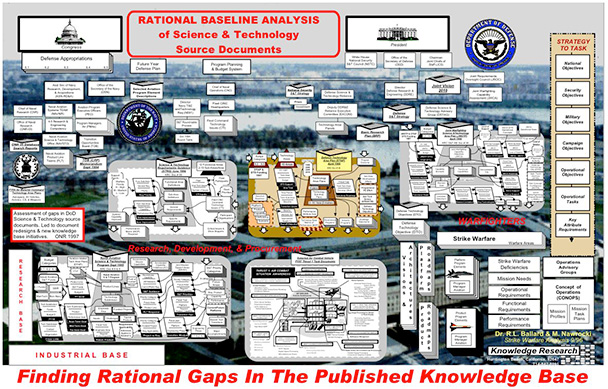
Figure 1: Science and technology knowledge base model map
As the users/learners become more numerous and diverse, thecomplexity and number of demands on the LMS grows. Acquiring and managing allan organization’s knowledge can be daunting, but with the right technology, itcan be accomplished.
When deep knowledge is made instantly available to answerquestions about functions or tasks as they occur, knowledge workers will happilyuse those technologies. Smartphones are a perfect example. Whether for communicationvia voice, text, email, Twitter, Facebook, or hundreds of other apps, smartphoneswin hands-down. As a system’s reliance increases, so does the ROI on thattechnology.
For this reason, the most important criterion when choosinga holistic knowledge ecosystem is whether it can reliably transfer bothrelevant, real-time operational and deep subject-matter-expert knowledge withinseconds. This huge requirement places an almost impossible demand onconventional technologies, which are not designed for deep knowledge modelingor the layering of multi-country, multi-language knowledge-based products. Solvethis problem, solve the real-time eLearning riddle facing the global enterprisemarket.
70:20:10 learning solution goal
From the perspective of the authors, the 70:20:10 principle,as defined by MorganMcCall and others, is not just another label to describe a learningapproach; it is a practical manifesto that echoes knowledge science and cutsthrough all the noise to present a clear and decisive learning principle forunderstanding what constitutes how best knowledge is transferred and learned. Assuch, it presents a standard that holistic knowledge ecosystems must fulfill tobe effective. This principle, again, is as follows:
- 70 percent from performing challenging functions and tasks (lifeexperience)
- 20 percent from developmental relationships (mentoring bysubject matter experts and peers)
- 10 percent from coursework and training (formal andself-directed learning)
The70:20:10 learning model has been challenged by academics, but its principlesresonate with other practical learning models such as those by Dr. Ballard inwhat he called “theory-based semantics.” This approach states that we learnthrough enculturation and education, and from our perspective, also from livedexperience and deep analytical thought.