Manyof us are at or near the leading edge of online teaching and training today,yet we also struggle with optimizing the overall learning experience. A lot ishappening: just-in-time mobile learning, performance support, internal andexternal massive open online courses (MOOCs), social media inside trainingstrategies, and ubiquitous content delivery just to start naming the trends.
Butwith all these training technologies coming together, we face one majorchallenge: ensuring a smooth, easy training environment for all our learners.So let’s look at how we can create a seamless learning environment. Look at thevarious elements of seamless learning that I identify in this article, notewhat your training strategy covers, and identify the parts that you canoptimize or add.
Backgroundof seamless learning
Wongand Looi (see the References at the end of this article) provide a usefulframework for seamless learning. They based their framework on an analysis of literatureabout MSL (mobile-assisted seamless learning) published between 2006 and March2011. From that analysis, theyidentified 10 features that characterize the seamlessness of a WMUTE design (Wireless,Mobile, and Ubiquitous Technologies in Education). Admittedly, thesecharacteristics are aimed at mobile learning, but I will match some of thecharacteristics they mentioned, and will address additional points of interest,opening up seamless learning for mobile, as well as online learning.
Theidea behind the MSL framework is to come to a set of characteristics that, whenaddressed, will result in seamless learning. Wong and Looi listed 10characteristics:
- (MSL 1): Encompassing formal and informal learning
- (MSL 2): Encompassing personal and social learning
- (MSL 3): Across time
- (MSL 4): Across locations
- (MSL 5): Ubiquitous access to learning resources
- (MSL 6): Encompassing physical and digital worlds
- (MSL 7): Combined use of multiple device types (tech)
- (MSL 8): Seamless switching between multiple learning tasks
- (MSL 9): Knowledge synthesis (prior knowledge, new knowledge, multidisciplinary learning)
- (MSL 10): Encompassing multiple pedagogical or learning-activity models (facilitated by teachers)
Althoughthe Wong and Looi framework was my starting point for this article, I merged someof the characteristics, and I added a few more dimensions (e.g., lifelonglearning, self-directed learning, durability, privacy, and collaborativelearning). Embedding these in an overall corporate or institutional strategysupports seamless learning for both mobile- and non-mobile-device learners. Anoptimal combination will allow the learner to swiftly move throughout thelearning environment with their preferred learning tool (mobile or not), and tocomfortably find their way through all the learning activities as theenvironment adapts and logs the learner’s activities.
Addinglifelong learning to encompass formal and informal learning
Assoon as mobile learning began emerging, it became clear that it offered anopportunity to connect learning across formal and non-formal settings (see Quinnin References). Inquiry learning in the classroom, in the training center, or inthe workplace could continue in realistic settings. As such, it is crucial forany learner, including adult learners, to be able to identify and seizeinformal learning opportunities in order to fully build upon these experiences.It can be tough for learners to get the most out of informal learning, and to turnthemselves into lifelong learners who are capable of keeping up-to-date withthe changes in their field of expertise. In order for this to happen, learnersmust become aware of their actual informal learning. They must receive guidancetoward improved learning via formal training offerings, and the trainingenvironment must push the learners to engage in authentic learning actions.
Embeddingcollaborative learning to encompass personal and social learning
Learningis no longer limited to the individual. Although some learners feel morecomfortable absorbing new knowledge by themselves, a contemporary learningstrategy should embed collaborative options: social media, peer expertiseexchange, and provision of group actions from which everyone can learn. Optionsto connect with peers are increasingly important. Creating support foroptimized individual learning (such as creating personal learning environments)is as important as collaborative learning and peer-to-peer learning in thisnetworked world. A factor affecting personal learning, mentioned in MOOCs forexample, is coping with the abundance of information. Coping with content andlots of information is a part of seamless learning because the capacity to doso affects effective learning.
Learningwith a vengeance across time and space
Themobility of the learners combined with the current diffusion of technologyresults in training that takes place at any time and from any location. Mobilelearning insights into just-in-time learning and augmented reality, as these becomeincreasingly omnipresent, add a layer of significance to learning across spaceand time. However, this means learners must have multiple capacities inreaching those anytime, anywhere content spaces and using them efficiently.
Addingcloud-based learning to ubiquitous access of learning resources
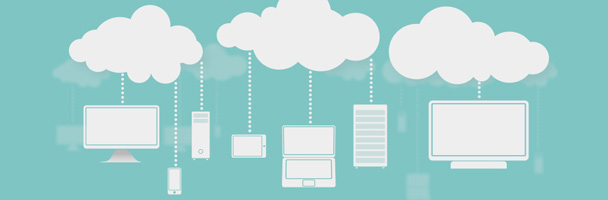
Cloudcomputing more and more enables learners to access content from any locationand at any time. By adding stable, cross-platform cloud-based solutions to alearning environment, seamless learning and ubiquitous access are easier becausethe company providing these tools is already testing them. Another option toensure ubiquitous access to all the learning resources is to use a learningplatform that combines both web-based and mobile options, which enables anintegrated, ubiquitous, and seamless online learning environment. However, thatoption might demand a lot of extra development hours to keep all the resourcesand the environment ubiquitous and smooth.
Usingcloud-based tools also has the potential to allow practitioners to providemobile support to their learners’ endeavors, while offering similarfunctionality to non-mobile users via more traditional computing platforms (seeOzdamli in References). In short, using cloud systems enables individuals toconnect from their mobile devices or desktop computers depending on thelearner’s preference.
Supportinglearning across context, encompassing physical and digital worlds
Theexpansion of the physical world to include the digital world is important. Manylearners can incorporate family members and friends, as well as teachers,colleagues, and peers in real-life situations to supplement the digital contentthey reflect upon. Due to the dispersed geographical location of many knowledgeworkers, there is not always that much physical contact available. Multiplecontexts can also arise due to the mobility of the learners. The difference incontexts adds to the challenges of seamless learning, as these contexts canvary from high exposures to technology to limited technological exposure. Itcan also vary due to more- or less-professional experience with the topic.Nevertheless, the learners must be able to switch smoothly between their variousphysical realities and the digital worlds.
Assuch seamless learning becomes more important we must be able to managelearning amidst this diversity of contexts and realities. Learner support toprovide guidance on how to cope with these contextual differences will relievesome of the anxiety that comes along with bridging physical and digitalrealities.
Usingmultiple devices
Wongand Looi describe the importance of switching between devices and contextswithout losing focus or losing time finding where one left off as a learner,and how this is a necessary factor for a fluid learning experience. Thisseemingly small detail is a real challenge for the developers. They need toensure that no matter which device is used, the learner finds their way aroundthe training environment without losing any time. In addition, the learner mustbe able to see what he or she has learned.
Thereis another factor to learning across multiple contexts, which is thetechnological learner’s experience as she or he moves between these settings byusing multiple devices. In addition, if a course is accessible for a multitudeof devices, learners need digital skills to deal with multiple characteristicsand affordances. In order for the learner to learn, she or he must be able tosuccessfully tackle these challenges that affect their learning. Digital skillsmust be nurtured!
Sharinglearning objects between learners and switching between tasks
Thereality of being mobile also results in more frequent multitasking, where thelearner is engaged in multiple tasks at the same time for a similar (ordifferent) professional purpose. Switching between these tasks can result ininformation loss, or incomplete actions if the actual switching between tasksis not set in a seamless structure. There is also an additional challenge forseamless learning, which combines different contexts with collaborativelearning and the creation of new knowledge ideas by the learner. In a fresh andup-to-date training environment, the learners have options for sharinginsights, hence increasing the knowledge cycle within the corporation orinstitute. This means providing moments to share what is learned, and creatingformal and informal learning options as mentioned before.
Knowledgesynthesis and learner-centeredness
Mergingmobile learning, MOOCs, and online learning overall brings additionalcomplexity for knowledge creation based upon prior knowledge and expertise.Learning is no longer a linear process; it is a continuing iteration that linksto prior knowledge, but that knowledge can then be modified after evaluatingnew information. In open, seamless learning spaces, learning can take place notonly in private spaces individually, but also in public spaces collaboratively.The learner becomes an ever-more important actor in the overall process oflearning and teaching.
Self-directedlearning as part of multiple learning models
Learnersmust be encultured into becoming seamless learners. Successful implementationof seamless learning implies motivated instructors or teachers. It depends onthe teacher’s ability to elicit what students have learned outside of the professionalor educational setting and what they have learned informally, and to connect thatlearning to the formal. The groundbreaking researcher on adult learning,Malcolm Knowles (see References), mentioned that “it is no longer functional todefine education as a process of transmitting what is known; it must now bedefined as a lifelong process of continuing inquiry.” This is essential forknowledge workers. These self-directed skills must be developed and nurturedwithin the learning environment. Of course, one essential element for successis the learner’s own motivation to learn. It is not possible to expectsuccessful learning without the learner’s active participation. This also has abearing on the learner’s prior digital skills, such as the ability to work withdifferent devices, comfort with social media, computer literacy, and so on.
Thequestion of ethics and durability
Partof seamless learning requires collaboration and the exchanging of learningobjects. If this involves large groups of learners, it raises issues of privacyand ethical considerations. Once learners share pictures, movies, or otheridentifiable artifacts from their professional contexts, it becomes difficultto ensure anonymity. However, anonymity of shared learning objects or artifactsis an important factor for continued trust. Trust needs to be made transparentin policies set up with the learners in seamless learning environments.
Inorder to build a durable learning environment, true learner participation inthe creation of the environment itself becomes a consideration. This allowsquick iterations that result in an improved training environment, based uponlearner feedback. Participation must be taken seriously. Feedback that comesfrom examining short-lived learning experiences, such as user satisfactionsurveys and strict comparisons of test measures, fails to provide comprehensiveperspectives on learners’ meaningful experiences. We need longer-termevaluations.
Conclusion
Seamlesslearning is still a new area, and the challenges are multiple. As thisdiscipline merges the technological and human challenges faced by the emergingnew technologies of the last decade (mobile learning, social media, MOOCs, etc.),it is becoming clear that the ultimate learning environment will have toprovide a smooth learner experience, with options to both consume and createcontent. It is a bit of unexplored territory. So feel free to tweet yourseamless learning challenges as well!
References
Knowles,Malcolm. The Modern Practice ofAdult Education: From Pedagogy to Andragogy. NewYork: Association Press, 1970.
Ozdamli,F. “Effectiveness of Cloud Systems and Social Networks in ImprovingSelf-directed LearningAbilities and Developing Positive Seamless Learning Perceptions.” Journal of Universal Computer Science,Vol. 19, No. 5. 2013.
Quinn,C. N. Designing mLearning: Tapping intothe Mobile Revolution for Organizational Performance.San Francisco: Pfeiffer, 2011.
Wong,L. H. and C. K. Looi. “Enculturing Self-Directed Seamless Learners: Towards a FacilitatedSeamlessLearning Process Framework Mediated by Mobile Technology.” WMUTE 2012: Seventh IEEE InternationalConference on Wireless, Mobile andUbiquitous Technology in Education. 2012.