Our newest casestudy—Supporting Multiyear Business Transformation—describes how Rent-A-Center (RAC) designedand implemented a series of highly innovative mobile learning and performancecoaching solutions for the company’s 18,000-plus employees in over 2,800 retailrental centers across the United States, Canada, and Puerto Rico.
These mLearning initiatives were essential to the successof Rent-A-Center’s multiyear business transformation, which included a newlabor model for US stores; a customer-focused, value-based pricing strategy; anew sourcing and distribution model; and new technology in stores. Key to meeting these transformationalbusiness challenges was the creation of mobile-based, supportive learningstrategies for individual change.
Introducing mobiledevice rentals
RAC has traditionally offered rentals of items such as brand-namefurniture, appliances, and other home-based consumer goods (e.g., televisions).Recently, the company expanded its offerings to include personal technologydevices and other forms of mobile communications technologies.
RAC now offerssmartphone rentals for customers’ rapidly evolving communications needs. RACsales associates help customers identify the right smartphone and plan to meettheir usage requirements. Because mobile communications technology is evolvingyear over year to deliver more innovation, consumers often find that asmartphone they have rented lacks the features and functionality that they sooncome to need. Therefore, RAC enables its customers to upgrade their existingsmartphones to newer models and change their smartphone plans as theirindividual voice or data needs change.
And a new value proposition
Acceptance Now is a subsidiary of RAC, andits role in the corporation represents a new and important value propositionwithin the evolving RAC business model. Acceptance Now provides immediate,on-site, virtual application review and approval. This is accomplished bystrategically placing kiosks (Figure 1) at retail partneroutlets.
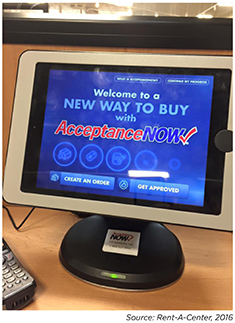
Figure 1: Acceptance Now kiosk screen
Acceptance Now kiosks provide rent-to-ownagreements to customers of other retail chains, including Rooms To Go, Ashley Furniture,hhgregg, and Value City Furniture. This value propositionhas helped RAC gain traction in the entire lease-to-own market, capturingcustomers who would have otherwise been lost because they do not qualify forcredit.
Business and people challenges
Moving RAC’sconsumer sales strategy rapidly into the mobile communications and consumer technologysector created significant business challenges. Among these was the need tomove internal business processes away from slower, less efficient paper-basedmethods and toward technology-enabled processes, which are more agile andresponsive to market challenges. Anotherchallenge was the need to update and revitalize the company’s technologyinfrastructure.
Not surprisingly, people challenges also accompany majororganizational transitions of this sort. In addition to adapting to the processand technology changes, RAC employees were challenged to learn new skills andmaster new workplace technologies to perform their job. This was made moredifficult by differences among segments within the RAC workforce.
Learning initiatives
The drive to achieve Rent-A-Center’sbusiness transformation goals necessitated three separate and substantiallearning initiatives, which have each presented unique and major challenges tothe RAC learning organization.
Smartphonesales—“Mobile Revolution”
RAC learning leaders called their smartphone traininginitiative the “Mobile Revolution.” Learning leaders knew this was a hugechallenge for their unit as well as a major opportunity to create a complex andinnovative blended learning program.
The core of the program was built around a two-day,face-to-face learning experience, with all training delivery—including slidedecks, video testimonials, online polling, and interactive activities—deliveredfrom the same type of Samsung mobile device that RAC employees would be sellingand using during customer interactions (Figure 2). The program included oversix weeks of training and 48 individual instructor-led learning sessions inlocations from Hawaii to Puerto Rico. A total of 7,000 RAC employees weretrained in the Mobile Revolution.
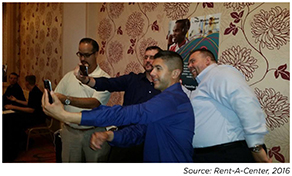
Figure 2: Mobile Revolution selfie activity
As one RAC manager noted:
Using the actual smartphones that would later be soldor rented to RAC customers made the Mobile Revolution training really powerfuland served as a major change management component [of the program]. [Using thesmartphones for training and coaching] gave training a lot of credibility.
Kiosk application approval—virtual Acceptance Now
Anexecutive vice president of Acceptance Now stated that the program’s success istied to adoption of “point-of-sale initiatives that have quickly taken root andare revolutionizing the way Rent-A-Center does business.” At the foundation ofthis approach is rental-approval technology that is integrated into aniPad-based assisted-selling tool. These were piloted in April 2014 and havebeen rolled out to nationwide kiosks since then, according to an August 2015 news release in Business Wire (see References). TheiPads feature proprietary rental-approval software that “automatically rendersan application decision while saving time and streamlining the approval process,”the release states.
TheRAC training team, using iPads, rolled out similarly designed training for the Acceptance Now rental-approval initiatives.The team developed eLearning modules, numerous job aids, videos, and otherresource materials that were housed in a library of material within the iPad.The central learning approach was different in that it used more “self-driven”learning materials housed on the iPad and operations training coaches were notinvolved.
Usingthis same approval software, sales associates from RAC retail partners, and thepartner customers, could also use the iPad tool to complete transactions on theirown. Alternatively, members of the retail partner’s sales team could use theiPad mobile technology “as a side-by-side guided selling tool to lead customersthrough the rental-approval process,” the news release states.
It is important to note that because the materials were housedon the iPad, it also served as a performance support tool. If the customers orretail partner associates got stuck at any time during a process or workflow,they could have easily accessed job aids or other resources to assist them.
Store manager development program—“Drive: Fourth Gear”
Understandably, all this technology, the new processes, andthe organizational change meant that RAC store managers (excluding Acceptance Now managers) were amongthose most impacted by the company’s transformational push. As a result, thecompany’s store manager development program, called “Drive: Fourth Gear,” hadto rapidly evolve away from the method it was using—a primary focus on eLearningwith little to no interaction—to a more agile virtual blended approach withvirtual operations training coaches (Figure 3).
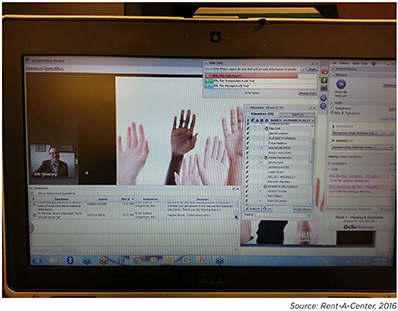
Figure 3: Drive: Fourth Gear virtual class
RAC managers were introduced to a blended 12-weekprogram comprising interactive eLearning modules, virtual instructor-ledclasses, and hands-on application-based activities. The virtual componentcomprised seven virtual classes, each with 25 to 35 participants, led byoperations training coaches. The purpose of this program was not only tointroduce new information and build new skills, but also to reinforce priorlearning experiences, build leadership competencies, and improve and accelerateoperational readiness. RAC had offered a limited amount of blended training inthe past, but this was the first time a new, more innovative “live” componentwas added.
With a wide range of store managers and high-performingassistant managers from across the company participating in the virtualtraining, RAC learning leaders found that collaboration, communication, andon-the-job (OTJ) cooperation increased significantly among the training cohort.
Technology platform
RAC’s learning delivery platform (Figure 4) for the MobileRevolution and improved store visits comprised the following three technologycomponents (separate elements of this platform were used for other learninginitiatives):
- Smartphones that provided handheld, immediateaccess to learning content and reference materials and a wireless mobile deviceport that enabled all smartphones used within individual stores to operateeffectively, even when the location did not provide Wi-Fi access
- Implementation and facilitation of virtualclasses
- Mobile presentation software that enabled RACoperations training coaches to deliver person-to-person training and coachingto all employees within the company, regardless of store location or individualjob function
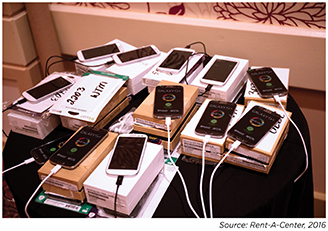
Figure 4: Mobile Revolution training devices
Usingtheir suite of mobile devices and software tools, RAC coaches can perform amultitude of activities, such as explaining a process using virtual slides,showing a video, looking at a process simulation, role-playing with sessionparticipants, sitting down one on one for a skill-building exercise, and openingup other virtual activities and materials.
Results
RAC’s mission-critical mLearning initiatives featured inthis case study have proved to be exceptionally successful. The leader of theRAC training organization did an outstanding job of describing to other members of the executive team each mLearning initiative and its planned impacts. Thiswas vital because the RAC training team was fairly new to the corporatestructure, and training leaders faced a somewhat negative perception of “sameold, same old” when it came to training.
However,as each of these mLearning initiatives progressed, the RAC training leadercontinued to communicate status and ultimate successes to companyexecutives, serving as a highly visible and effective champion for the trainingorganization.
- As for the perceived impact and success ofthe mLearning initiatives themselves, one RAC coach simply stated that “thetraining spoke for itself,” and another coach noted, “We have had nothing but accolades;employee turnover has been reduced and OTJ performance has been enhanced. … [Wehave been able to shift the culture] and improve morale of field employees.”
- Thesepositive results have also extended to the learning needs and quality oftechnology adoption achieved within each of the diverse employeeconstituencies. For example, the training initiatives have been well receivedby hourly and part-time employees; the one-on-one personal touch of performancecoaches has created buy-in and enthusiasm among Gen X employees; and Millennialshave embraced the smartphone mobile delivery and technology-enabled salesenvironment.
Lessons learned
I have summarized some of the key lessons and best-practicesuggestions gleaned from RAC’s mLearning initiatives. See the case study for acomplete list.
- Do not be afraid to take chances on new technology, butbe sure to accommodate the technology and tools learning curve in your projectplan so that you can be successful. Learn as much as possible about any newtechnologies before starting development, especially any best practices thatcan make your job easier and allow you to deliver a better final product.
- Recognize that technology has the ability to deliver awow factor for training and can become the most memorable piece of theexperience. Because of this potential benefit, RAC found that it was alwaysworth taking the extra time to learn, practice, and perfect learning designs tocreate a great first impression on learners.
- Keep the learner experience at the forefront whendesigning learning initiatives. Depending upon the audience, you may need toallocate more or less time for change management, or additional time to helpleaders adopt new processes and tools and successfully use the system.
- Deal with the BYOD issue. Because many RAC employees havetheir own mobile devices, information and learning resources have proved to besomewhat easier to deliver. However, RAC has not yet developed any trainingprograms that rely upon the BYOD approach. Currently, RAC employees at the multi-unitmanager level and above are provided with a mobile device and can access sometraining materials via that device. Workers below that level are not directedto use their personal mobile devices to access or complete assigned training. Operationscoaches can and do use both personal and company-provided devices duringtraining.
Looking ahead
RAC learningleaders, training staff, and coaches look to continue their learninginnovations in the years ahead. As a team member said, “We want to push theenvelope even further, try to be even more innovative.” The RAC team is alsolooking ahead to several specific challenges:
- Developlearning solutions using HTML5, and then enhance these solutions withinnovative options for mLearning.
- Revisecurrent operational metrics for sales of smartphones.
- Bettermeasure OTJ proficiency gained from the initial Mobile Revolution training, andthen identify course corrections for future training design that improveperformance, knowledge transfer, and operational efficiency.
- Identifyhow the team can move forward with the design and delivery of on-demandlearning solutions.
- Identifyways to speed up training delivery times and become more agile. This willremain an important issue due to hourly-worker churn within the retail industrybusiness model.
- Continuedoing a good job of identifying the company’s top business goals, and alignwith these priorities. Key to this overall effort is continuing to evaluaterequests for learning initiatives and resources that best align with the mission-criticalgoals of company executives.
Conclusion
As we noted in the case study, most people tend to defineblended learning straightforwardly,such as “using both online and in-personlearning experiences to parallel and complement one another.” However, thiscase study has illustrated how the Rent-A-Center team was able to create abreadth and depth of learning and individual growth experience that goes farbeyond simple online and classroom training.
Beyond their innovative use of mobiletechnologies and mobile designs, Rent-A-Center’s learning initiatives continueto emphasize what many have called the “human element” in today’s technology-mediatedlearning environments. The central integrative role played by the RAC operationstraining coaches/SMEs (Figure 5) emphasizes how important it is for learners ofall generations and types to be fully connected and engaged with the humanelements of their learning experience.

Figure 5: Anoperations training coach prepares for a session
References
Rent-A-Center. “Same-Store Sales on the Rise at AcceptanceNow: Virtual Approvals and Assisted-Selling Tools Help Drive Gains.” Business Wire. 10 August 2015.www.businesswire.com/news/home/20150810006137/en/