Bob Mosher, the chief learning evangelist at APPLY Synergies, has been a learning leaderfor 33 years. But, he reveals, in the past 10 years, he’s started looking at“the entire experience and all of the tools of my craft, including thetraditional ones, through a very different lens.”
Bob, who was recognized by The eLearning Guild as a GuildMaster in 2014, recently talked to Learning Solutions Magazine about hisemphasis on what he calls “workflow learning” and how that has dramaticallychanged the deliverables he creates and the results that learners achieve.
The following conversation has been lightly edited.
Pam Hogle: Youtalk about “workflow learning” quite a bit. What do you mean by that?
Bob Mosher: It’sa term that has ended up resonating the best for me in the work that I do. It’sbasically because of the two words; ultimately, our charge as learningprofessionals is to impact work, impact performance.
I think all of us know that the most powerful and meaningfullearning in our lives has occurred in the process of “doing.” As hurtfulsometimes, or frankly painful, as those lessons have been, they’ve often beenthe most powerful and meaningful and long-lasting ones for us.
Workflow learning, for me, is really the tip of the sword;it’s the bull’s-eye that I think we all are targeting, in that we can makelearning truly immersive. We can make it a part of the workflow in a way thatthe learner, at times, may not even realize that that’s what they’re doing.
Learning theory teaches us that with the old stimulus response,the salivating dog, the farther away from the event that we move the stimulus,the less impactful it is. For years, we’ve taken people far from the stimulus;we’ve taken them to class, we’ve taken them online. I am not by any meanssaying those are not powerful parts of the journey that a learner needs. Butthis whole concept of designing for the workflow and having it be both atraining and a support environment—to me, that’s what learning is made up of.It’s made up of times we learn for the first time; it’s made up of times thatwe try to relearn or unlearn what we know. So workflow learning, for me,encapsulates that really important sweet spot for learners.
PH: How is thatdifferent from performance support?
BM: It reallyisn’t, to be honest. Our industry is one of jargon, right, so the reason I’veshifted to calling it workflow learning is that when I’ve talked to people in theline of business or to learners themselves, they get it. Nobody wantsperformance support. I’ve never found a learner or a manager of 100 people whogoes, “Oh yeah, what we’re missing here is performance support.”
But if I talked to them in the context of, “What if I designworkflow learning for you?” Learning that’s consumed at the moment of need…
PH: So, thelanguage has moved on, but the underlying concept is tried-and-true?
BM: Yes. It’sfunny. I’ve been at performance support as a discipline for 10 years. I spentthe first six trying to convince people of what it was. I got these noddingheads, but for the most part, glazed looks. In the last four years, I’veshifted to workflow learning … and it just resonates so much better.
PH: What are youactually delivering? Is it just-in-time training or job aids? Is it mobiletools? Or is it all of that?
BM: It is! A fewyears back, we threw around two terms: “formal” and “informal” learning. Inever liked “informal,” candidly, because it was just too big. Anything thatwasn’t formal was informal. I struggled as a designer. I’m a designer first, soI need a systematic way to build stuff. Back then, when we were throwing thetwo around, I was like, “This doesn’t work for me. But everyone wants it.”
PH: Everyonewants informal learning?
BM: Oh, yeah!
PH: But theydon’t know what it is?
BM: No, no. …Performance support, what it has done for me as a designer, through wonderfulfolks like Gloria Gery, Allison Rossett, Frank Nguyen, and my partner, Con Gottfredson—these people have built constructs and methods that allow us tocreate [performance support] like I always created learning. Tools, like thoseyou mentioned, job aids, mobile, communities of practice—these are tools of thetrade that is performance support. So, like any good craftsperson, my job, whenbuilding a home, a playhouse, a deck, is to get out the right tools to createthe deliverable. The things that you mentioned are the tools of the informaldomain, and our job, as the designers, is to craft those in a way that meetsthe need of the performance that we’re trying to enable.
PH: Is itindividualized, personalized? Or is it more generalized to a work group?
BM: It isactually both. That’s where the art of the design comes in. What we have to becareful of, as I’ve learned in my work, is that our job is not to customizelearning. It’s an oxymoron, because customized learning or individualizedlearning or personalized learning—how do we build that? I can’t personalize for100 people. “Personalized” means I, as a learner, personalize my learning.
For years I tried to create—we used to call it “customizedtraining.” We thought it was our job to sit down in a room and analyze everypossible scenario and then create this thing that we put in front of ourlearners—and it was customized.
What I’ve learned is, our job is to build these constructs,these domains, these dashboards, these websites—it depends on how they manifestthemselves. Knowing the learners’ context, the overarching workflow (back tothat word again), their roles—it might be accountants, lawyers, marketers,salespeople. We can analyze that domain really well. We can understand theworkflow; we can understand the tasks performed there.
What we don’t have to do, unlike what we do in training is,we don’t have to go too much farther and say, “Now I’m going to architect thatentire experience for you,” because now we’ve crossed a line that the workflowlearning doesn’t require.
We need to create a manageable, accessible, intuitiveenvironment where the learner chooses well, once they understand it. That’swhat a well-designed performance support solution looks like. It isrepresentative of the context. That’s as much as it needs to be, because thelearner then says, “I get it; this encapsulates what I do. But now I’m going tochoose, based on the options you’ve given me and the tools you’ve madeapparent, which ones help me right now.”
PH: So you’reproviding options, different paths that people can choose?
BM: That’s thecrux; that’s what we didn’t get before. As training developers, we would neverdo that. We would never throw learners into a room with a bunch of lessons andsay, “Okay, now just pick one.” We’d never say, “Just go off in the corner,and, you want to do lesson five? You do lesson five.”
No, that’s not training. In training, we architect from 8 to5, that entire experience. In the workflow domain, we don’t have to.
PH: We’ve beendoing work on creating content that provides better access and accessibility—notonly for learners who have disabilities, but for everyone. That sounds likewhat you are describing here.
BM: I’ve learnedthere are two domains here, two axes. One is accessibility; you’re spot-onthere. But there’s another axis that I was blind to. There is one thing aboutaccessibility; and then there’s this whole other axis of usability. Man, thatusability thing changes the whole world.
Let’s say you’ve got a SharePoint site with a ton of links,lots of good stuff up there, ranging from a job aid to a 30-minute video, andeverything in between. Our belief was that the learner would land on this page,see a category for performance appraisals—if that’s what they’re doing—and go, “Oh,20 things! How helpful is that.” And just start clicking on things because theyare accessible.
But here’s the problem: When the learner’s at that point ofwork, there’s a scale of gray here about the kind of asset that they want. If Idid an appraisal a month ago and just haven’t done one in a while, the job aidis stunning because, frankly, I probably just need a tool that reviews for me,right? But if I haven’t done a performance appraisal in a year? Or maybe it’smy first time; after getting manager training nine months ago, I’m finallydoing my first performance appraisal. That job aid is meaningless to me becauseit’s just not enough. In that case, the 30-minute video, which basicallyreteaches doing a performance appraisal, is really what I want.
So what we’ve learned is, yes, accessibility. Rule numberone: If they can’t get to it, they will not consume it. Period. And it has tobe very innately and intuitively in the workflow—I don’t have to walkacross the building; I don’t have to wait for a coach to answer my calls. Thoseare not accessible things.
But the second thing, once you’ve got me to the precipice ofthat experience, is what you present in front of me. Even though everything theremight solve my problem, they’re not all helpful. So what we try to do is, wearchitect these domains. We’ve seen different methods: tabs across the top ofthe page, and all kinds of things that basically introduce the assets in ausability scale from very simple and quick—a job aid, a Post-it note, literally—downto very hefty and deep and long, i.e., a 30-minute eLearning module. Andeverything in between.
What’s masterful about this, what’s exciting to watch, isthat the learner—once they get that architecture—becomes really good atself-selecting because they’re living in the context of the problem. So, oncethey learn that hierarchy, they go, “Oh yeah, I just want the down-and-dirtymethod. I don’t want a lecture; I don’t want moving parts. I don’t want video.Just give me a six-step job aid and I’m outta here.”
PH: There are twothings about this that you don’t really know about each individual learner. Oneis what knowledge they come with—how much they already know. And the other iswhat level of competency they need.
BM: Correct. Andthat’s why the domain has to help them with that. That’s why there are layersto this pyramid. We call it the performance support pyramid. And there arelayers of this pyramid that are exactly what you describe. There are layers ofit that assume a lot of base knowledge; therefore, they do not teach. Theyassume a high level of aptitude. That’s what a job aid does, to be honest—ifit’s written well.
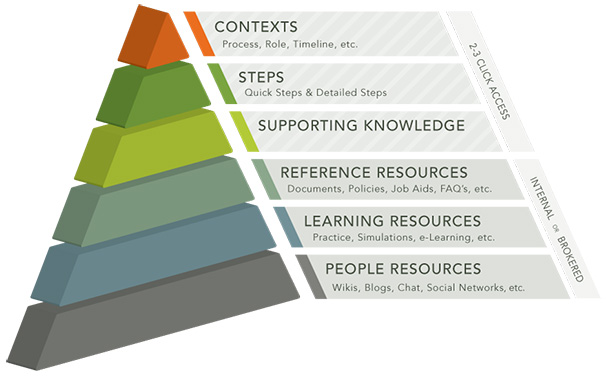
Figure 1:Performance support pyramid from APPLY Synergies
But if a learner comes in and does not have that, then thelayers below that—as each layer gets broader and wider, it should include more ofthe two things that you said: It should teach more, and it should inform more.Then the learner can say, “This third level is exactly where I am. I could usea little refresher, maybe some instruction; I don’t need the lesson. And youknow, I didn’t really understand the concept of X. So, that little paragraphyou gave me really filled in for me. Now I can perform.”
PH: So, you havea big topic, and you divide it up into units of instruction. So does each unithave those layers?
BM: Yes. That’swhen I get back to what I call workflow analysis. We have to be careful, asinstructors, of reverse-engineering this. This is not, by definition, aninstructional moment. By definition, it is a support moment. If a learner needsto be taught, I’m going to put it in there. I’m going to design from theworkflow back. I’m going to design from that job aid back.
Now, if I’m teaching, I completely invert that. If I’mteaching, I cannot assume any base knowledge. I have to start with, “In thislesson, you will learn…” because I cannot assume that you have that already.
One of the biggest things that we, as designers, have tolearn is that the workflow, by its name, provides a ton of contextual hooksthat the classroom and eLearning have had to provide for learners. When I go toclass, I’m not at work anymore. I may be sitting there with 20 other peoplefrom 20 other companies, so the instructor has to use all of these metaphorsand analogies and all of this storytelling because they have to bring all ofthis richness of context to those learners. When I am in the workflow, I amsitting there staring at that performance appraisal that’s due at 4 PM. I knowwhat a performance appraisal is; I get it. I get what I’m trying to do here.Now, I don’t know the legalities or the steps—that’s where the instruction orsupport comes in. So the analysis starts with the workflow.
PH: It’s a realtask, rather than a simulation or made-up example.
BM: I love that;that’s exactly right. My colleague, Con Gottfredson, and I have struggled withthis. It really is a true task. But back in my ADDIE days, when I was taught todo task analysis, if I may say—we really didn’t define tasks. Not job tasks.When we say “task” in this context, what we mean is a job-work task. Not thetask of printing an Excel. The task of doing a report as an accountant. Thoseare really two different kinds of tasks. And in this domain, it’s the latter.We want to find out the kind of workflow tasks first. Once we nail those, andthe overarching workflow, everything else is filled in from there.
That’s a different approach. This is my 33rd yearof being in the business. The first 21 or 22 of them, I did not look at my workthrough this lens. It has been a reorientation for me to do this stuff.
But here’s what’s exciting. I was just talking yesterday toa large bank, a global bank. And I said, “You guys, here’s the thing—I have yetto build performance support and not still build classroom stuff.” Because ifI’m going to build a solution for my customer, ultimately there’s going to besome classroom stuff. It is still part of the mosaic.
Here’s the difference: I used to start there. I used tostart building training stuff first … classroom stuff and eLearning stuff. Andthen if I had any time left, I would build workflow stuff. Or I would hope thatthe stuff I was building for training would become workflow stuff.
What I do now, to oversimplify it, is, I build first for theworkflow. And then, almost always, I will still build some kind of learning—atraining experience. But it’s very different than the ones I used to build whenI started with that because … you know [the learners are] going home to thisreally well-designed safety net.
Just to give you some metrics, I have found that the averagetraining deliverable I build now is half as big as it used to be. Because theburden of content being covered—I hate that word, covered—is no longer (norshould it probably ever have been, if I can get a little “out there”) theresponsibility of the classroom.
It’s such a hard burden to put on a stimulus that’s milesfrom the response, that it has to cover everything. Well, if you have thiswonderful tool, you don’t; you cover the most critical. You let peoplepractice; you let people crash and burn. You let them fail and pick themselvesup and learn through using the tool. And then, when they leave, they are somuch more enabled and empowered to not just remember everything—which theynever do anyway—but to apply, if nothing else, the most important things.
PH: So, how cansomeone get started with this? Many of our readers are new to eLearningdevelopment or are one-person training “departments.” Do you have anysuggestions that could help these readers create a program that enhancesworkflow and performance?
BM: I sure do.Two things.
Number one: Start real small at first; don’t boil the ocean.It’s a problem in our industry. These shiny pennies come along and we sit downand our thought is, “We have to reinvent instruction as we know it.” That’snever going to happen, especially in a mom-and-pop shop. So here’s mysuggestion: With your clients, find a performance gap, something that a jobrole is not doing well. I’m trying to get really focused here. Don’t try to say,“What class should I write? What software is being released next year? We wantto rearchitect our leadership curriculum.”
Those chunks are way too big. Sit with a line of businessthat you know. Sit with a learning leader that you trust, that likes your work,or that you’ve done brilliant stuff with before, and just say these words: “Whatkeeps you up at night?” and “Give me three things that those under your chargejust can’t figure out”—here are the words—“how to do.” Not “understand” or “learn” or “ShouldI retrain them?” That’s not how I just said that.
What’s exciting is, the answer they will give you is veryfinite: “They can’t do their annual report.” “They’re terrible on phone calls tocustomers.” “They can’t close the sale.”
See, those answers are really specific to one or a coupletasks. There’s that word again. Tasks that an employee is not performing well.
And then, here’s part two: Build first for a deliverablethat solves that performance problem in the workflow. Build first.
I’ve done it a thousand times totally on my own. One person.Think about the stuff we talked about, think about the pyramid—but don’t gocrazy. Don’t build a jackhammer here to kill a fly.
This is the beginning. Once you build one, even if it’s areal simple one with a couple of job aids, and you see how learners react—yousee how that businessperson goes, “Bob, you just solved one of the biggestthorns in my side because now all the weekly reports are perfect; every weekthey’re perfect”—you will all of a sudden go, “I am on to something huge here.I want to build a lot more of these.”
What’s funny is, once you become known to the business as [someonewho builds] stuff that makes the company perform quickly and efficiently, theline at your door will be like you’ve never seen before. Because it works.
That’s how we need to be seen; not the learning arm of thebuilding or L&D. That’s a scary place to hang your hat—I’ve been there.