
Storytelling is central to the most compelling eLearning; asan art, storytelling is as ancient as humanity itself. But it’s due for areboot—and there’s a surprising twist.
Storytelling 2.0 doesn’t need words
Incorporating storytelling in eLearning is not a new development, but the implementation is changing.
The genesis of wordless training may well be those dreadedinstruction sheets that come with “some assembly required” furniture. Stickfigures or equally minimalistic renderings depict the proper way to assemble adesk or TV stand. While these have resulted in countless buyers tearing outtheir hair in frustration, something must be working: The furniture gets built.And people keep buying (and building) more.
A recent digital iteration is the explosion of emoji. Amongyouthful employees, entire text-chat conversations consisting exclusively ofemoji are de rigueur; when words do appear, they are frequentlytruncated, misspelled, or subjected to other forms of abuse.
Between those extremes, it’s possible to find everydayexamples of wordless communication that is highly successful, such as“universal” icons. Who among us does not understand this symbol:
 or this one?
This one:
 might ultimately give way to this one:
 ,but there is no confusion as to what is meant.
Chinese author Xu Bing has created an entire book, Book from the Ground, using only icons, emoji, and other widelyrecognized pictograms. And an all-emoji “translation” of Moby Dick was published in 2010.
Graphical depictions can also bear out the aphorism that apicture is worth a thousand words. Artist Yang Liu created a series of graphical images that compare Eastern and Western cultures, taking ontopics as diverse as the way workers view their boss (or themselves), culturalnorms around waiting, and how people approach problem-solving. The simplegraphics are easily understood and offer a cross-cultural channel forunderstanding cultural differences.
An illustrated path to globalism
At its heart, visual storytelling is a triumph of globalism.At the same time, it’s the path to diversity and smooth operations acrosscountries, languages, and cultures. Corporate trainers needing to reach aglobal audience of employees can do so far more easily—and cost-effectively—witha visual story that has little text than with a text-based eLearning modulethat needs to be translated into several languages.
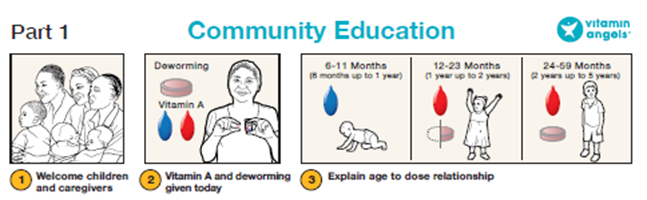
When TorranceLearning developedan eLearning program for Vitamin Angels, the team created training that was heavy onvisuals to reach a multilingual audience whose members also included many withlow literacy. Illustrated checklists were a key element in training thatemphasized images and visual instructions. They explain every step of the trainees’client interactions and recordkeeping, including:
Figure 1: Welcoming clients
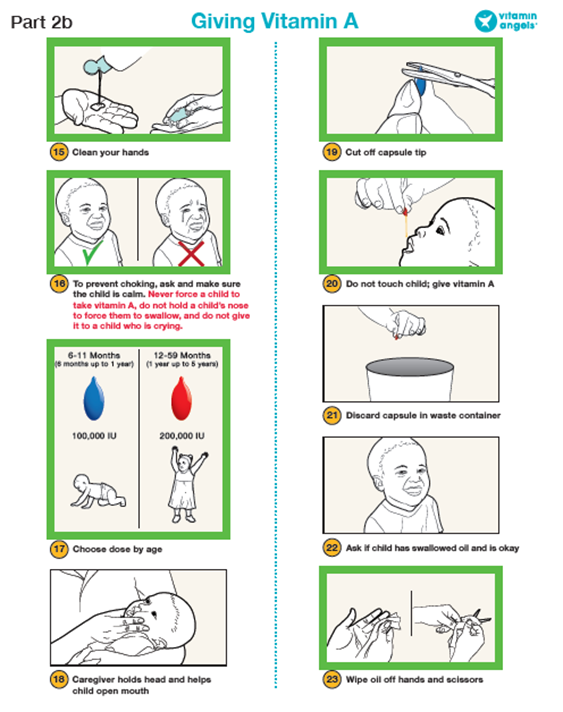
Figure 2: Administering treatment, amultistep process

Figure 3: Recordkeeping, which even usessimple drawings to illustrate concepts like the passage of time
Though the complete checklist was printed—in multiplelanguages—on a durable, reusable material, a similar approach could easily beimplemented online.
Even where literacy is not a concern, presenting the sameinformation to all learners in the same way is appealing; it enables trainingmanagers to track who’s gotten what information and figure out where gaps inemployees’ knowledge or understanding might have occurred. If a US-basedtraining manager can’t read the instructions provided to Asian or Europeanlearners, she’ll have a much harder time tracking down those trouble spots.
Visual storytelling is experiencing a rebirth
The idea of visual storytelling—telling a story usingprimarily visual media, such as photos, graphics, and video rather thanwords—is emergent in popular discourse and instructional design. The current increasein attention is largely due to the visual nature of popular social media platforms,such as Instagram, Pinterest, and Vine.
But storytelling predates written language by thousands ofyears: Oral storytelling—and, yes, visual stories etched on the walls ofcaves—date back tens of thousands of years. Paleoanthropologist Genevieve von Petzinger has documented geometric symbols created by early humans that,according to her research, likely served as the earliest form of writtencommunication.
Digital media offer L&D professionals the freedom tointerpret and apply the concept of visual storytelling however they choose.It’s possible to exploit learners’ natural affinity for photos, video, andgraphics to enhance or completely reinvent some eLearning. Consider, forexample, telling stories using infographics; creating videos with no dialogue,only images and music; or using a series of comic-book-style drawings, eitherstill or moving, to tell a story with little or no text. There’s even help foreLearning designers and developers who do not consider themselves artistic orwho lack the resources to create extensive video and graphic elements: open-access media resources.
Resources
“A Brief History of Emoji Art, All the Way to Hollywood,” by Amanda Hess,explores examples of visual storytelling (NewYork Times, July 28, 2017).
Barbara Waxer, an educator and frequent presenter at Guildevents, offers a comprehensive list of open-access media resources on her website.