
The healthcare industry is an intersection of emergingscience, technology, and educational and legal policy. Medical knowledge doubles every six to eight years, thereare new innovations in medical procedures every day, and it is the obligationof every healthcare practitioner to keep their knowledge and skill set up todate. The average physician will practice for over 30 years, while the averagenurse practices for 40 years. It is painfully obvious that continuing educationis an important challenge within healthcare education.
Given the scale of the training required, new educationaltechnologies offer solutions that enable widespread use of these trainingsimulations among trainees and also allow for easy updating of the coursecontent. Virtual reality (VR) is one such innovation that is promising aparadigm shift in the approach to healthcare training for both continuingprofessionals and students within healthcare. Virtual reality trainingcontextualizes training and offers an experiential, exploratory form oflearning through rich, interactive simulations. Being a new consumertechnology, the novelty factor helps raise interest and motivation to completethe training, and ultimately, effectively support the acquisition and transferof skills.
Today, as VR technology is becoming more and more pervasive,there is a wide spectrum of variation in technological sophistication, incurredcosts, and the types of skills-training needed by medical personnel. Forinstance, Fortune reported thatNicklaus Children’s Hospital in Miami partnered with Samsung Gear VR to createVR training scenarios to teach procedures like Foley catheter insertion,starting an IV, the Heimlich maneuver, wound care, cardiopulmonaryresuscitation, and nasal-gastric tube insertion. The preliminary results havebeen outstanding. Dr. Narendra Kini, CEO at Miami Children’s Health System,reported that the retention level remained at 80 percent one whole year aftertraining, compared to a traditional training methods retention level of 20percent after only a week.
The study above and many others have proved that virtualreality is poised to revolutionize the healthcare training industry as itenables critical, time-sensitive, and job-specific training. Enablingexploratory learning in a risk-free environment is ideal for formative learningand training.
Applications of VR in healthcare training
Over the last few years, big players in the tech industrylike Facebook, Google, Samsung, and HTC have invested in the future of VR. Thetechnology has since evolved dramatically, providing high-fidelity VRexperiences at affordable price points. Academia has been a proponent of VR aseducation technology for many years now. In 1962, the Sensorama simulator (Figure1) was invented to prevent trainees from undergoing hazardous conditions duringtraining with expensive equipment. The objective was realistic experiencesimulation through artificial sensory stimulation.
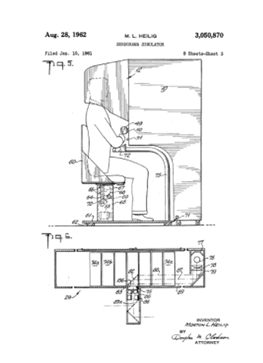
Figure 1: The Sensorama simulator (1962)
Traditional simulations cost millions of dollars to develop;require expensive, specialized hardware; and need a lot of support to deploy ona large scale. With virtual reality training—and with the visual feedbackcombined with haptic, force-feedback technology—surgeons can experiencefeedback within both sensory modalities. The benefits of VR training move beyondsurgical training to training for any healthcare practitioner. It’s animmersive, engaging, and safe way to receive training on new protocols,equipment, and techniques. This education technology enables physicians to gainconfidence, learning critical skills in a risk-free environment. They can evensimulate low-frequency scenarios and create better assessment techniques.
Another important avenue for VR training is for emergency responseprotocol. Catastrophes are inevitable, and emergency medical (EM) personnelmust respond rapidly and effectively. Training EM personnel can be challengingdue to the variability in the types of disasters, the emotional and physicalstressors when working in potentially dangerous environments, and thechallenges of training for infrequently used, but critical, skills. VRtechnology enables us to provide a deeply immersive and interactive experienceof first responder duties. The firsthand experience in performingcontextualized disaster triage sets trainees up for success in a real-world,high-pressure disaster situation.
As mentioned earlier, the types of VR content are varied,and so are its benefits. Within dentistry, there is a new medical VR trainingtool called “hapTEL.” This VR dental chair has a 3-D virtual set of teeth towork on, and students of dentistry practice protocols like doing a fillingusing a VR drill that uses force feedback and mimics the movement and pressureof a real drill.
While this exciting new technology opens many avenues forhealthcare training applications, it’s important to consider the rationalebehind the benefit of this technology. While experiential learning is known tobe more beneficial than traditional chalk-and-talk-style lectures, how does onejustify the higher costs and how are learning outcomes improved?
Human beings evolved to experience the world primarilythrough the visual system. The ability to perceive depth enables the learner tovisualize the presented information more effectively, reducing the cognitiveload. When learning a procedural task that must be carried out in a 3-Denvironment, it becomes difficult to visualize and perform that task when thelearning materials are all 2-D. Virtual reality decreases the intrinsiccognitive load during learning, enabling a faster, more efficient trainingprocess. So although the deployment costs for VR training are high upfront,over a period of time that cost is more than recovered by faster learning timeamong trainees, thus saving costs on training resources and also making thetrainee operational faster.
Clinical applications of VR
The potential for VR training in healthcare is vast, andmany companies have begun investing in simulation-based learning. However,there is another avenue of VR application in healthcare that has a more directimpact on patients, through their own experiences of personal healthcare.
An obvious opportunity that simulated realities present isfor exposure therapy. Whether it is for phobias, anxiety, or post-traumaticstress disorder (PTSD), one method of treatment involves low-dosage, graded,and controlled exposure to the stressor. Prior to VR, patients would engage in imaginal exposure therapy, the benefitsof which have been well documented (see References: Rothbaum, Meadows, et al., andRothbaum and Schwartz). However, a defining symptom of such disorders,especially PTSD, is an inherent avoidance of imaging the traumatic events.Virtual reality enables a graded, safe, and controlled exposure to stressorsthat result in significant improvement and maintenance of these gains. TheUniversity of Southern California Institute for Creative Technologies has beeninvolved in many efforts for therapeutic virtual reality applications, PTSDbeing an extremely successful one. Dr. Albert Rizzo from USC has spent 20 yearsusing VR to develop novel treatments for those with PTSD. As Dr. Rizzo himselfsaid to Business Insider, “It has notbeen the theory or research that has held back clinical VR, rather theavailability, adoption, and costs that have limited its widespread use.” Theheavy financial investment in newer, cheaper hardware is going to see to anexplosion in the VR market for both content and hardware.
The University of Washington HITLab, in collaboration withHarborview Burn Center, developed a virtual reality therapy tool that aids inquelling pain symptoms in burn victims. The virtual environment distracts thepatient from the pain of having wound dressings changed. Pain management is animportant and complex domain within healthcare, given the danger of opioids.The results with VR therapy were staggering. It was found that for identicalprocedures experienced by the same person, reported pain was less than halfwhen distracted using VR technology versus a standard Nintendo console.
Conclusion
The world of VR has seemingly endless applicability withinthe healthcare industry. Its benefits will affect all students of healthcare,healthcare professionals across services and levels of expertise, andultimately, with the appropriate clinical research, every single person in theway their healthcare is delivered to them and their options for treatment.
As artificial intelligence, bio-feedback sensors, and deeplearning technologies improve, there will be a massive integration of thesetechnologies to improve education and training systems—creating individualized,smart, and adaptive simulators that will forever change the way healthcaretraining is delivered in the future.
From the editor: Learn more at DevLearn 2017
If you are faced with making decisions about which breakout,cutting-edge tools you need to be ready to use, the NextTech focus at The eLearning Guild’s DevLearn 2017 Conference & Expo (October 25 – 27 in Las Vegas) is designed justfor you! An Early Registration Discount is available until end-of-day September 8, so don’tdelay!
References
Gaudiosi, John. “Here’s why hospitals are using virtual reality to train staff.” Fortune. 17 August 2015.
Heilig, Morton L. Sensorama Simulator. US Patent 3,050,870, issued 28 August 1962.
Loria, Kevin. “Virtual reality is about to completely transform psychological therapy.” Business Insider. 22 January 2016.
Mesko, Bertalan. “5 Ways Medical Virtual Reality Is Already Changing Healthcare.” The MedicalFuturist. 21 July 2016.
Rothbaum, Barbara Olasov, Elizabeth A. Meadows, PatriciaResick, and David W. Foy. “Cognitive-Behavioral Therapy.” In “Guidelines for Treatment of PTSD,” Journal of TraumaticStress, Vol. 13, No. 4. 2000.
Rothbaum, Barbara Olasov, and Ann C. Schwartz. “ExposureTherapy for Posttraumatic Stress Disorder.” AmericanJournal of Psychotherapy, Vol. 56, No. 1. 2002.
Senson, Alex. “Virtual Reality In Healthcare: Where’s The Innovation?” TechCrunch. 16 September 2015.
Virtual Reality Society. “What is virtual reality training?” 28 June 2017.
Wallis, Thomas. “6 VR uses in Healthcare that will blow your mind.” VR Intelligence. 19 May2016.