
Would datanarratives like this be compelling inside your company?
- A dashboard toyour C-level shows that 80 percent of your international sales reps whocompleted optional training ranked in the top 20 percent of sales for thefollowing three quarters.
- Reports providedto your instructional design staff show that “63 percent of learners wereseeking the video to the three-minute mark in the course on disaster recoverytraining while they were taking the quiz.”
- A report to the CLOshows that learning scenarios about your business-critical processes are 22percent more popular than any other training event.
Would you besurprised to know that all of these data narratives and more can come from acentralized learning record store (LRS) database using the Experience API(xAPI)? As technology continues to advance in a steep upward curve, newtechnologies and specifications like xAPI are proving to be valuable in anumber of diverse enterprise case studies. The potential power of xAPI, and itsease of use, is being proved more and more each day. Many medium to largebusinesses and institutions see a flexible and integrated learning-servicesapproach as a viable option thanks to the work being done with xAPI.
A “Summary of Top Findings” from the 2016Brandon Hall Group Learning Technology Study, as well as my discussions andresearch with other industry-wide organizations, seems to support many new usecases that will extend the learning enterprise. The Brandon Hall study states:“48 percent of organizations surveyed list exploring new technologies as thetop learning and development priority over the next 12 months.” The same studysays, “The need to integrate with other systems is a big factor in whyorganizations switch learning technology providers.”
There definitelyseems to be a refocused direction to learning enterprise technology thinkingand approach. The most common systems that learning technology integrates withare human resource information systems (HRISs), at 37 percent; contentmanagement, at 29 percent; and talent management, at 28 percent (Figure 1).Looking ahead, 36 percent of companies say it is critical that their nextlearning technology platform integrates with a talent management system. ClaireSchooley of Forrester Research recommends that every human resources and L&Dteam consider all the opportunities technology offers as they look for new andinnovative ways to share information.
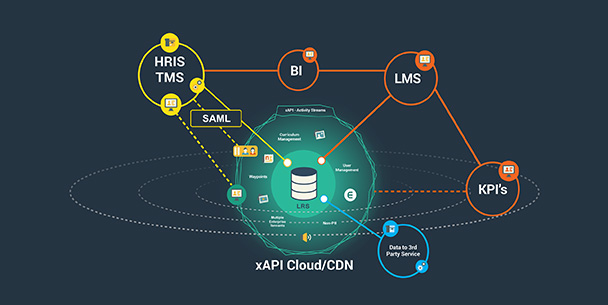
Figure 1: Representative ofthe enterprise xAPI client case today
These systems arethe source of truth in today’s organization. Since you can establish trainingrules and workflows in these systems, it makes sense to integrate and managetraining initiatives there.
What is xAPI?
xAPI is a simpledata format that technology applications can use to record experiences. It canproduce an activity stream (I, did, this), with timestamps second by second, ofwhat happens during learning events. Rather than just completions and scores,all of the interactions during interactive multimedia instruction—time of day,length of sessions, accomplishments playing a game, reading an article,answering questions, or watching a training video—can all be recorded by xAPI.Note that xAPI is not just for eLearning. It can instrument live trainingdevices, Internet of Things (IoT)-enabled devices and sensors, mission-criticalsoftware use and training, and more. xAPI is readable by both humans andcomputers, and it allows for simple integration and interoperability betweendisparate systems.
In terms of thenew technology needed to implement xAPI, it uses a database called a learningrecord store (LRS) to store the data. From that LRS database you can evaluateyour training (using both formative and summative evaluations), generatereports, and create a stronger link between training and performance.
For simplicity,let’s look at an eLearning or mobile learning example. Suppose I am taking anonline course with video instruction followed by an assessment. Upon completionof the video and assessment, I have potentially generated many xAPI statementsthat not only give results but also insight into my behavior during the course.The following is not xAPI, but it is readable in a similar way:“[Nick]-[launched]-[the video activity (attempt 3) (date/time)], [Nick]-[sought]-[thevideo (at 00:23)(date/time)], [Nick]-[paused]-[the video (at 01:00)(date/time)]and [Nick]-[launched]-[the quiz activity (attempt 2) (date/time)],[Nick]-[selected]-[(C) question ID001 (incorrect)(date/time)],[Nick]-[answered]-[(C) question ID001 (incorrect)(date/time)],[Nick]-[selected]-[(B), question ID002(date/time)], [Nick]-[selected]-[(A),question ID002(date/time)],[Nick]-[answered]-[(A), question ID002(correct)(date/time)] [Nick]-[mastered]-[quiz (8/10 80%)(date/time)]”
Did you noticethat this was my second attempt and I changed the answer to question ID002before I answered it? If I had referred back to the video in order to answerthe third question, we would have that too.
Creating the linkbetween training and performance is one of the areas where xAPI-enabledtechnology is a key to the future of learning and extending the enterprise.What if you could see the big-data views of how 50,000 users went through yourtraining? Maybe you have complex branching scenarios that challenge users andcan have multiple outcomes. Would you like to generate heatmaps showing how theusers progressed through them? xAPI can inform your training evaluation in away that the industry seems to have stopped asking for.
When interactivemultimedia instruction was a young science, we wanted this kind of reporting.SCORM made the promise of capturing interaction data, but in its wider adoptionSCORM became a mere shell of what was intended. SCORM is only about contentinteroperability, while xAPI is about realizing true content and datainteroperability. With xAPI, it is the action and activity of the learner thatmatters.
Still, if testingis the only reason you are going to use xAPI, there is no need to move awayfrom SCORM. None of the systems in use today needs to know xAPI in order for itto “speak” xAPI, and getting this to happen is fairly simple. In most cases, ifthe system is able to generate events, you can subscribe to those events andassign each an xAPI value. There are many emerging cases; Xerox presented one duringxAPI Camp at FocusOn Learning 2016 Conference & Expo, for example. There havebeen other presentations at the xAPI Camps at Amazon, Autodesk, LurieChildren’s Hospital, and at Jisc in the UK. I will be discussing one of Riptide’s case studies during the xAPI Camp at DevLearn 2016.
How adaptable isxAPI? In a recent implementation, my team was working with the University ofSouthern California and a vendor to produce an HTML5 game using Phaser.IO. The Phaser.IO developer did not need to knowxAPI to get xAPI reporting out of the game. At DevLearn, I may also be discussing the xAPI badging and achievements engine that we used in this program.
You can find alist of xAPI Camp presentations here.
What about your LMS?
Good news! Youcan extend your enterprise learning ecosystem with an LRS, and you do not haveto replace your LMS. I think the best thing LMSs could do is consider a managedLRS service themselves, because that would allow them to adapt to this newtechnology and serve their current clients more rapidly. To be completely fairto the LMS publishers, they have the real business problem of making sure atechnology is solid before they can adopt it and offer it to clients. But howdoes that help you right now? Once today’s LMS clients come to terms with thefact that their LMS may have some deficiencies in providing a clear path to thelearning ecosystem of the future, the next question is, “How can I get what Ineed now?” What you can do is start by standardizing real learning and trainingevaluation data using xAPI/LRS technology, and you have ample proof that youcan do it rapidly.
Current and upcoming activity
Thereis considerable activity around xAPI currently and in the coming month, withopportunities for those interested to take part.
DISC update
Aaron Silvers andMegan Bowe are spearheading the xAPI Data Interoperability Standards Consortium(DISC), which is currently fortified by a business associate agreement with theAdvanced Distributed Learning initiative(ADL). DISC will be a member-supported organization representing the vendorsand stakeholders that seek to grow a fair and equitable global marketplace fordata and analytics solutions. Get involved at DataInteroperability.org.
xAPI conformance requirements for LRSs
On September 30,DISC delivered The Experience API (xAPI) Conformance Requirements for Learning Record Stores to ADL, which is now developing an LRSconformance test software.
xAPI certification
Last week, onOctober 24, DISC and ADL kicked off a two-month effort to recommend acollective approach to xAPI certification.
xAPI Camp
xAPI Camp, the must-attend one-daypre-conference experience, returns to DevLearn Conference & Expo in Las Vegas on November 15 toshowcase what’s possible with xAPI and help you accelerate your work with thistransformative technology. It will be a day filled with case studies, problemsolving, and networking. You’ll be connected to answers you can act on and anincredible community of practitioners who will help you make an impact. xAPICamp requires pre-registration.
xAPI Central
In the DevLearn ExpoHall from November 16 – 18, The eLearning Guild has set aside a vendor areacalled xAPI Central. DISC will have a booth in xAPI Central where an open-area roundtablewill be maintained for vendors and stakeholders to have discussions and share storiesof successful implementations, demonstrations, and problem solving.
xAPI in concurrent and learning stage sessions at DevLearn
Learning stage sessions:
- How Visa Built an LRS-centric Ecosystem onWednesday, November 16, 1:15p – 2:00p on the Emerging Tech stage. In this case study, learn how Visa built anxAPI-enabled ecosystem for Visa University Online that allows it to customizeand track learning experiences. Explore how this program delivers value to thelearners and insights to the training department.
- The xAPI: The Swiss Army Knife for Your Learning Environment on Thursday,November 17, 11:00a – 11:45a on the EmergingTech stage. This session from Robert Gadd of OnPoint Digital will coverwhat the xAPI really is, how statements are structured, and how it is beingoperationalized.
Concurrent sessions:
- xAPI: Why Should I Care? (Morning Buzz session) onWednesday, November 16, 7:30a – 8:15a. Grab a cup of coffee and meet otherconference attendees in a relaxed, casual environment so you can share yourbest practices, insights, and tips while learning from one another’sexperiences.
- Dreamers and Pragmatists: What Really Needs to Happen Next to Make the xAPI Fly on Wednesday, November 16, 1:15p –2:15p. Catch up with the xAPI dreamers. Learn how you and your development teamcan start realizing the full potential of the xAPI. Learn about the currentstatus of the official xAPI Conformance Suite. You will learn which questionsto ask in order to tell if a vendor is really xAPI conformant. And finally, learnhow you can contribute to the xAPI community.
- Is It Working? Correlating Usage with the xAPI onWednesday, November 16, 3:00p – 4:00p. Learn how you can use the xAPI tocapture data from different activities into a single uniform format in the LRS.Then, by looking at a real-world example page with video and test questions,you can start analyzing results to see which activities contribute most tolearner success and which test questions need work. And by knowing how toleverage your data, you can begin to see how to design your content to makesure that data is where you need it, when you need it!
- Getting Started with xAPI Statements on Thursday, November 17, 1:15p – 2:15p.Take a close-up look at what exactly makes up an xAPI statement. You’ll startby defining the requirements for creating a valid statement. You’ll then learnhow you can assign vocabulary and context to a statement and look at theoptional fields that you can use to further define your xAPI statements.
- Making xAPI Data Useful (Morning Buzz session) on Thursday,November 17, 7:30a – 8:15a.
- Using the xAPI to Collect Learning Data from Simulationson Thursday, November 17, 3:00p – 4:00p. Learn how the American College ofChest Physicians (known as CHEST) used the xAPI and a learning record store tocollect learning data from its medical simulations and share the data with itsLMS. CHEST’s experience of broadening what training you can track will give youa road map to adoption within your own organization. You’ll find out about thetechnical details, best practices, and lessons learned from CHEST’s experiencewith the xAPI, which will help you unlock the technology’s potential anddeliver more innovative learning experiences.