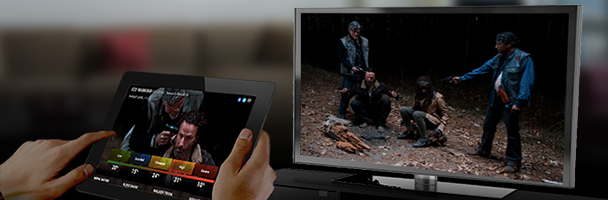
The second screen, a term given to utilizing a second mobile device to access supplementarycontent or applications, is no longer a passing trend. With more than 84 percent of Americantablet and smartphone owners using their devices while watching TV, second screens have shifted the TV viewing experienceto become an active experience rather than passive consumption.
Encouraging viewersto interact in real-time alongside a TV show using a second screen keeps TVfans more engaged and buildssocial viewing communities around social media engagement and interests relatedto the show. Second-screen savvy networks like AMC, who used second screen applications during episodes of TheWalking Dead and Breaking Bad that allowed fans toparticipate in social media polls, contests, and questionnaires, have drivenuser engagement to the point that Nielsen now scores social activity and Twitterparticipation alongside its traditional ratings.
Similar to how the TV industry isusing the second screen to drive viewer engagement and build a fan-basedcommunity, second screens offer corporate learning and training professionalsthe same opportunities to support employee instruction and increase engagement.Today businesses can extend and accelerate online corporate learning programsthrough the support of the second screen, and create more active,community-based, and personalized training programs. Here are three benefitsthat the second screen provides corporate online training programs.
Active participation
Interaction is key to drivingbetter learning outcomes, and more businesses are turning to online options tocreate more active training programs. In 2014, eLearning Industry reported that corporations listedonline learning as the second most valuable training method that they use. Ascompanies continue implementing online learning programs to further engage learners,second screens have the power to help these learning programs “bridge the gap between the physical and virtual audience,” sparking moretwo-way conversations with the presenter and participants.
For example, beautypowerhouse Avon used newrow_ for training to connect trainers face-to-facewith thousands of independent sales representatives online. In addition tofacilitating real-time conversations while showcasing new products throughvideos and presentations, the sales representatives (reps) actively commentedand asked questions via text chat and quick polls.
As a result of encouraging second-screendevice use into the online training program, 58percent of Avon sales reps actively participated during the session with textchat and interactive widgets, keeping them actively engaged andfocused during the session. In addition, morethan 2,500 chat items were posted by the reps during the first live onlinelearning event, which gave trainers the ability to answer questions andcomments instantly.
Backchannel communities
Not only does second screen usecultivate a stronger channel of communication between the presenter andparticipants, it also gives learners access to more backchannel and secondarycontent, context, and opinions as they engage in learning among peers. Forinstance, learners can reference a manual or particular document referred to bythe presenter, simultaneously, without toggling between pages.
In utilizing these resources, learners,much like TV viewers who join chat rooms to discuss the latest episodes, willfind common learning interests among each other. Based on mutual interest orgeneral experience in a subject, these “communities” are valuable trainingassets to companies that can tap them to provide peer-to-peer learning sessionsand career development in more focused areas.
Personalized training
Using a secondscreen to find preferred training resources and various collaborative learninggroups, training becomes more personal and unique for each employee, givingthem the ability to create their own learning path.
Unintentionally,second screen use drives personalized learning. For example, Event Tech Brief equatesthis phenomenon with the simple act of looking up a definition during apresentation or reading presentation materials. Learners who are unfamiliarwith a term during training can click the word in a presentation or flag theterm for later research through a second screen device during training,allowing participants access to more granular knowledge on particular subjectsof interest. For data-heavy training sessions, participants can view links todetailed studies and graphs on a second screen by clicking a link or flagging atopic within the presentation, allowing them to go back to a particular subjecton their own time.
For moreintentional personalized training, second-screen use provides trainers with adigital blueprint for reviewing an employee’s mastery of concepts. Using anonline learning platform’s performance and activity analytics, trainers canalso gauge whether the content delivery meets an individual’s needs based onoutcomes or assessments.
Additionally,training administrators can use analytics of second-screen engagement to seewhat training sessions garner the most interest, participation, and attendance.Based on this information, training administrators could set up breakout sessionsor invite guest speakers to talk more about subjects drawing the most interest.
Thanks to showslike The Walking Dead, we’ve seen social TV power the use of thesecond screen to prevent viewers from becoming zoned-out zombies. Instead, thesecond screen has fueled fan interaction and brand loyalty by making TV viewersactive participants throughout the show. Today, the power of the second screenproves valuable outside of social TV as businesses begin to reap the samebenefits. By incorporating interactive elements into teachingprograms, trainers will effectively drive greater learner engagement whileaddressing the same tune-out challenge that networks once faced.
(Editor’s Note: Readers maybe interested in “The Second-screen Experience: Designing a PaperlessClassroom,” Session 203 on Wednesday, March 25 at the Learning Solutions Conference & Expo in Orlando, presented by Andrew Vecchiarelli, instructionaldesigner at BMO Financial Group.)