
- On mobile alone,YouTube reaches more people between the ages of 18 and 49 than all of the majortelevision or cable networks.
- By the time youfinish this article, over 3,000 hours of new video will have been uploaded to YouTube.
- There will be abillion video views on YouTube today.
- Those aged 14 to 29spent 75 percent more time watching YouTube in 2015, while traditionaltelevision viewership fell across every single demographic.
- If you and yourorganization are not on YouTube, you’re missing out.
Over the past decade, YouTube has becomea lot more than a repository for silly cat videos. YouTube, in fact, has becomethe single most watched media site in the world. The depth and breadth ofmaterial on YouTube is astounding. In the education sector on YouTube, peopleare teaching everything from car repair to computer programming to personalfinancial management.
Brands and organizations have concoctedentire strategies around YouTube. These strategies often complement the organizationalmission—and YouTube provides a very convenient channel to expand that missionbeyond traditional audiences. The Library of Congress’ YouTube channel has more than 14 million views. Some organizations are even using YouTube for whatwould traditionally be internal education and training.
Avon’s Be a Breast Friend video furthered thecompany’s commitment to breast cancer awareness and has been viewed over600,000 times. The WestJet 2013 Christmas Miracle video was viewedover 45 million times and has become a most powerful employee recruiting toolfor the airline.
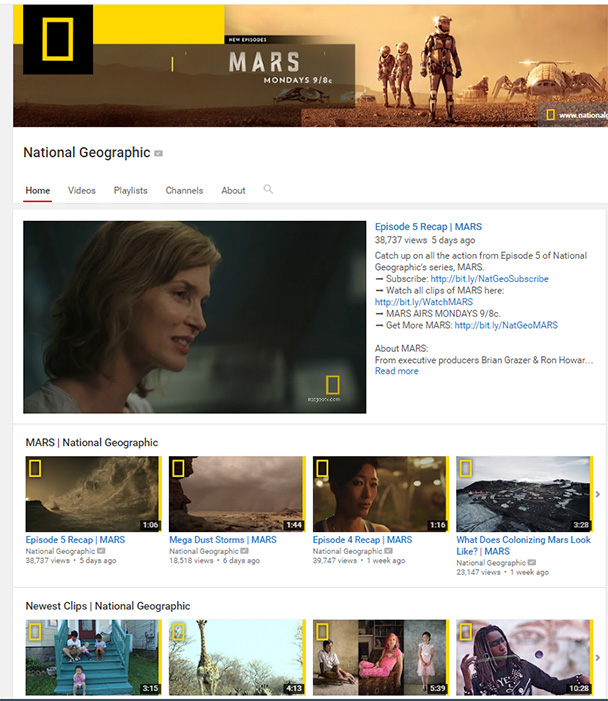
Figure 1: National Geographic on YouTube. With a YouTubenetwork of 40 channels, National Geographic has uploaded over 85,000 videos acrossall its channels and boasts nearly 5.5 million subscribers on its main channel.
Let’s dive into some top educational YouTubechannels and then discuss how you’d start a channel for your organization.
What teachers(and learners) are doing on YouTube
Each of the channels mentioned below hasa distinctive strategy that has led to success on YouTube. While some areindependent YouTube channels competing for eyeballs like any other mediaenterprise, others are a component of a larger media strategy.
Channel:Minute Physics
Subscribers:3.6million
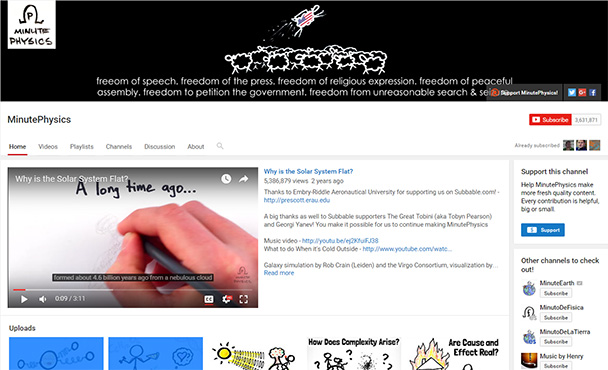
Figure 2: Minute Physics onYouTube
Created by Henry Reich, Minute Physics isa joyful celebration of physics. Physics may not be your cup of tea, butReich’s videos are viewed over 5 million times a month, earning him as much as$8,000 per month (estimated).
Channel:Mark Crilley: Author, Illustrator, Video Creator
Subscribers:2.7million
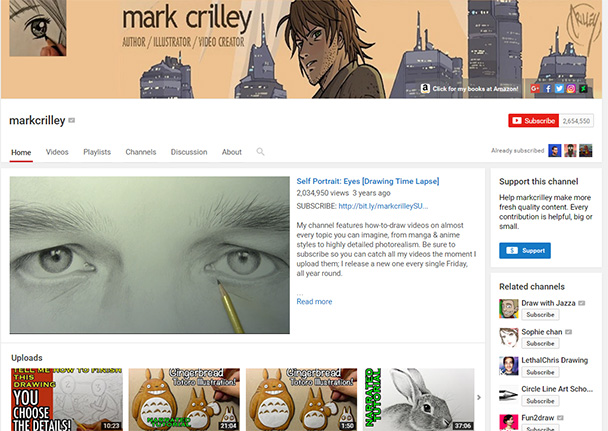
Figure 3: Mark Crilley onYouTube
All things drawing are featured onCrilley’s channel. Earning Crilley over $100,000 per year (estimated), thischannel is about the best source of learn-to-draw videos on the Internet.
Channel:BBC Earth
Subscribers:Nearly1 million

Figure 4: BBC Earth on YouTube
Perhaps direct monetization is not thegoal of the BBC on its BBC Earth channel. YouTube provides a nice brandextension from its traditional broadcast properties. Videos on this channelhave been viewed over 350 million times. This is significant in that the weeklyglobal audience for the BBC is just under350 million.
Channel:Rainbow Loom
Subscribers:430,000

Figure 5: Rainbow Loom onYouTube
Rainbow Loom is a crafts company whoseproducts allow creation of jewelry, toys, models, and artwork. YouTube providesthe cornerstone of its active online network. The channel providesinstructional videos on making crafts with Rainbow Loom products. This tinycompany has had almost 100 million video views.
Channel:Kraft Recipes
Subscribers:50,000
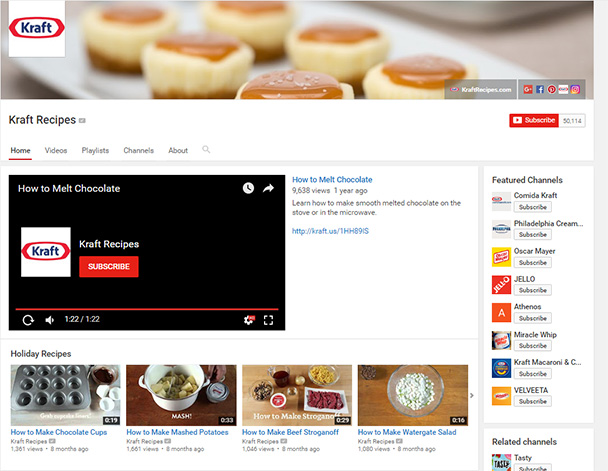
Figure 6: Kraft Foods onYouTube
Mighty Kraft boasts just over 18 millionviews. Considering the footprint of the company, perhaps Kraft needs to review itscooking-video strategy.
How to createa YouTube presence
To benefit from the huge audiencesvisiting YouTube on a daily basis, you need to have a presence on the platform.The mechanical process for developing a YouTube presence has been welldocumented elsewhere. YouTube strategy is perhaps more difficult to getcorrect. Below, I’ve discussed a few issues that may help you get your YouTubechannel off to a strong start.
What is thepurpose of your YouTube channel?
Many put up a YouTube channel out of a misplacedsense of vanity. However, if you’re constructing a YouTube channel for acompany or organization, you have to consider what you want the YouTube channelto do for your brand. For my LearnToProgram.tv channel on YouTube,we want to find new users and “convert” them to our home site. For BBC Earth,it’s likely the goal to extend viewing time. Consider your organizational goals,and develop a YouTube channel congruent with those goals.
If you’re in the nonprofit or educationalsector, this is kind of a “no-brainer.” For others, it may be more difficult tocome up with the intersection of organizational goals and video content thatmakes the YouTube effort worthwhile.
Who is theaudience for your YouTube channel?
If you’re a Texan, you’re probablyfamiliar with the phrase “one riot, one Ranger.” (The phrase was said to becoined in 1896 when a Texas Ranger arrived to stop an illegal prize fightwithout any additional law enforcement support.) When it comes to YouTube, therule should be “one channel, one audience.”
Before you start creating and uploadingcontent to YouTube, you should determine who the audience is for your channel. Perhapsyour audience is employees distributed across the globe. Maybe your audience isexternal and focused on clients and consumers associated with your brand. Maybethe audience is people with a specific affinity. You should be able toverbalize exactly who your audience is in a sentence.
For an interesting take on an educationalchannel directed at customers, check out what boating retailer West Marine is doing with its YouTubechannel.

Figure7: West Marine on YouTube
West Marine sees its customers as theaudience for its YouTube channel. Notice the “how to” titles in the recent uploads.
What are themetrics that will determine success on YouTube for your organization?
You might have noticed that throughoutthis discussion I have used different measurements when examining the successof a channel. You might be after the most video views or a large subscriberbase. For others, the sole measurement of success is monetization.
YouTube recommends that you start withmodest goals and grow them over time. Many channels begin with a few thousandviews for their first video and 50 subscribers as a starting goal. Thosenumbers will grow over time, and so should your expectations. Understandingyour primary metric and measuring it is important because it allows you to quantifythe time you’ve spent building your organizational YouTube channel.
How can youuse content that has already been developed? What new content needs to becreated for a YouTube channel?
A YouTube channel is dynamic. With youraudience and purpose in mind, you should inventory your content. You may beable to launch your channel with the content you have on hand. However, you mayfind it difficult to sustain momentum without regularly releasing new contentto your YouTube channel.
To sustain your initial momentum and growyour channel, I recommend that you create a one-year content plan so that youraudience has frequent new content and a reason to visit your YouTube presenceregularly.
JoinMark at The eLearning Guild’s Learning Solutions 2017 Conference & Expo in Orlando, March 22 – 24, 2017, for hissession Better Video: Twenty Tips in 60 Minutes.