



Games & Learning
Games and gamification are powerful ways to enhance engagement, adding elements of story, challenge, motivation, and other gaming principles to improve learning outcomes.
-

Once Again, Games Can and Do Teach!
In a recent article in Learning Solutions Magazine, “Why Games Don’t Teach,” Ruth Clark says it’s “not that games can’t teach, but that advocating games as a main or even frequent instructional strategy is misleading.” Karl Kapp disagrees and offers this counterpoint, including evidence from research showing that games are effective teachers.
-

Why Games Don’t Teach
Ask trainers to define what they mean by the term “game” and you will likely hear a mix of features or examples. The problem is that many things that could be called a game do not necessarily lead to learning. A leader in the field of instructional technology takes on the question: Is it right to advocate games as a main or frequent instructional strategy?
-

Open Badges: Portable Credentials for Learning
The next target of disintermediation is diplomas, certifications, and other “official” records of learning, skills, and knowledge. A number of organizations are promoting a credentialing approach that awards “badges” directly to learners from providers. Learners can maintain and publicly display their badge portfolios independent of employers. Read about these new initiatives here.
-

Game Architecture: Delivering Meaningful Learning Experiences
Recent research challenges the assumption that games are not an appropriate channel for learning. By focusing on delivering the necessary experience, designers can produce meaningful, engaging eLearning as games. Here are guidelines to effective mechanics, story, aesthetics, and technology selection that support contextualized practice, invitation to action, and self-assessment of decisions.
-

Is it Time for a Change? The Environment Model
Is the handwriting on the wall for eLearning? The design, development, and delivery of content intended to facilitate learning have undergone many changes. Perhaps it is time to change the way we are doing things. If you believe that eLearning is not providing sufficient value for anything other than “tick box compliance,” read this for a different direction that you may want to consider.
-

Book Review: Unschooling Rules, by Clark Aldrich
For anyone who thinks education in America isn’t quite right and wants to do something about it, add Clark Aldrich’s Unschooling Rules to your summer reading list. This quick read of Aldrich’s 55 common-sense insights will surely pique your interest. And you may soon find yourself unlearning everything you know about schools in America today.
-
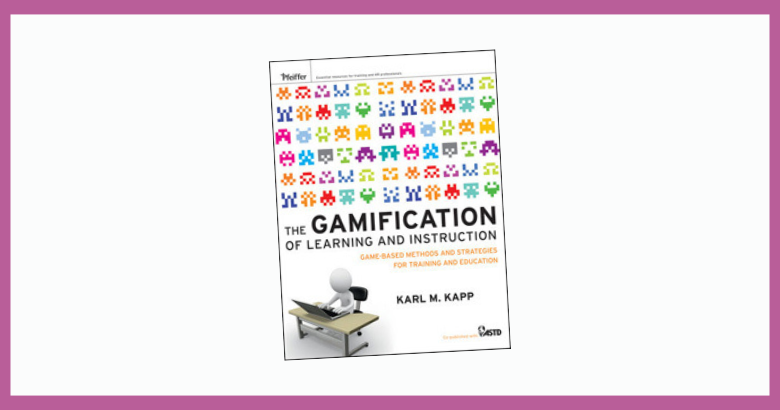
Book Review: The Gamification of Learning and Instruction, by Karl M. Kapp
If you’re up to the challenge, Karl Kapp’s latest book offers best practices, design considerations, and pragmatic recommendations that will surely change the way you think about enhancing your learning initiatives through the use of games.
-

Just One Question: Brenda Enders on Gamification
“Gamification” is a relatively new buzzword in application design, including eLearning. Many designers and developers aren’t quite sure what it means, or how to apply the concept in their work. Brenda Enders gives you great insights in this interview.
-

Well Read: A Theory of Fun for Game Design
Why are there so many games in eLearning? Why do so few of those games actually contribute to or support learning? Ralph Koster has some definite ideas about those questions, and others as well. This month’s review introduces you to what game designers understand about learning.
-

The Human Factor: Serious Game, Strategic Partnership
Mobile and social technologies can combine to support learning and performance, as can simulation and gaming. But games, simulations, and social technologies can also be combined collaboratively to support learning, performance, and other real-world tasks. Here is an example that also suggests a model for collaborative development of such applications.